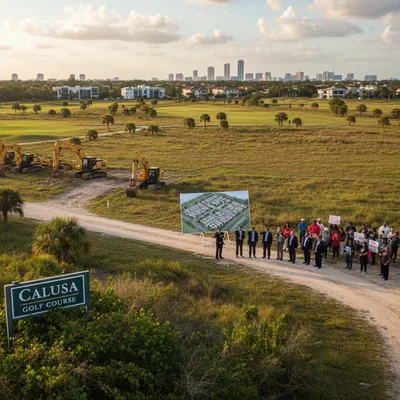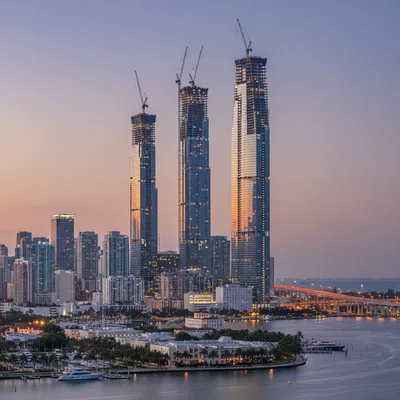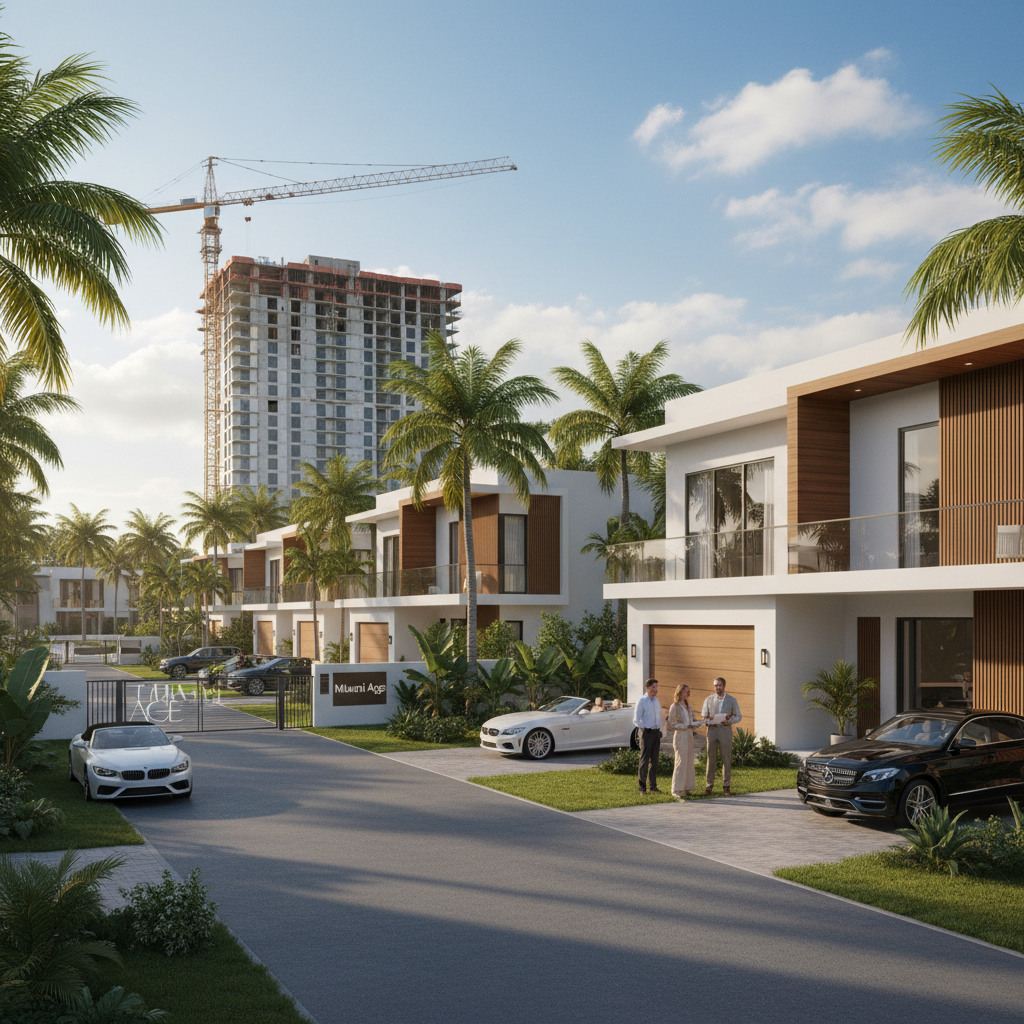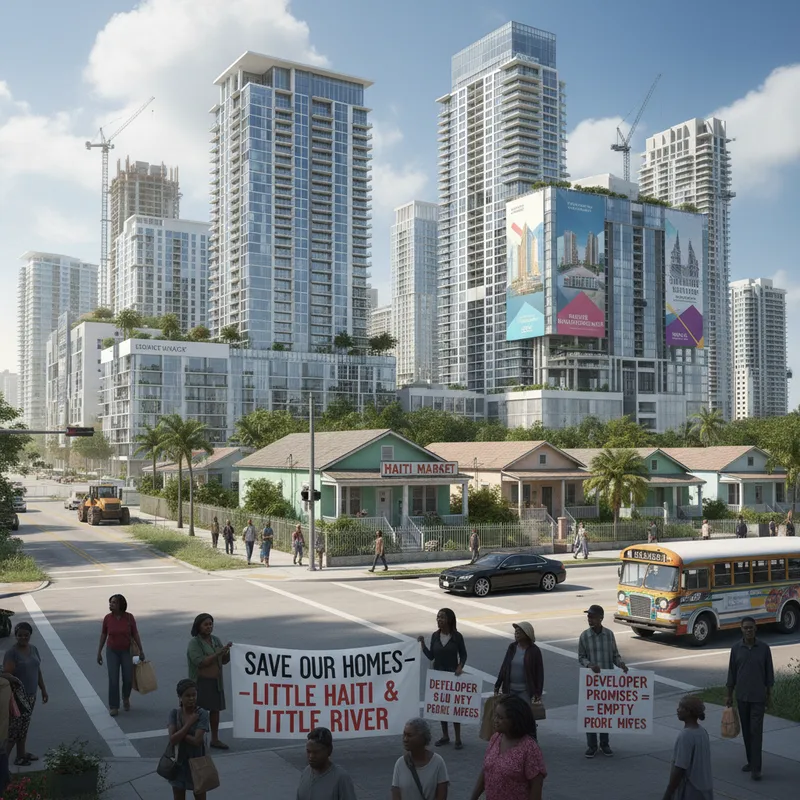
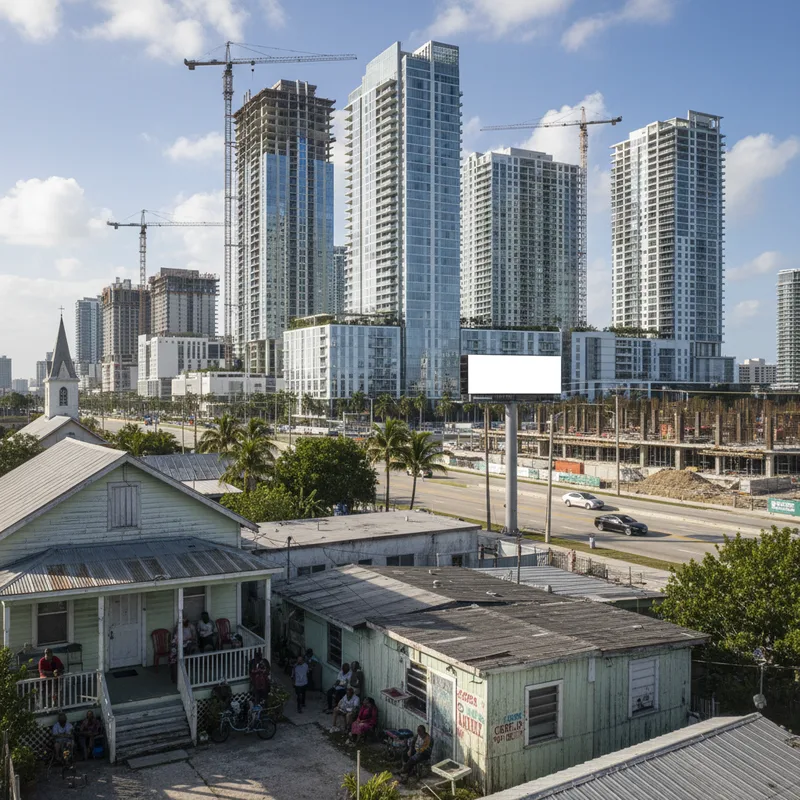
Developers are launching some of the largest projects in Miami's history in Little Haiti and Little River, promising to transform the historically affordable neighborhoods with billions of dollars in luxury apartments, retail centers, and commercial space. However, the ambitious plans require clearing large areas, including dozens of public housing buildings and warehouses, fueling deep-seated fears that the current residents will be priced out and displaced.
At a recent Bisnow event on the future of the two districts, developers and city officials insisted they are committed to ensuring the communities can benefit from the coming changes. More than 10,000 apartments and over one million square feet of new commercial development are planned for the area between Northwest 75th and Northeast 54th streets. Danny Fishman, CEO of Gaia Real Estate, noted the area has long been neglected. "A lot of people that live there could not afford anything else, and they lived in not the best conditions for anything, safety, cleaning," Fishman said. "I think that all this change is also a big transition, bringing amenities to the area."
The redevelopment push targets one of Miami's most culturally significant and historically affordable enclaves. This boom is the latest chapter in a city known for its dramatic boom-and-bust real estate cycles, which have historically reshaped neighborhoods across the region.
A cultural haven meets a development wave
Little Haiti, also known as Lemon City, and the adjacent Little River neighborhood became a vital sanctuary for Haitian and Caribbean refugees fleeing political turmoil and poverty in the 1970s. This influx established the vibrant, distinct culture the area is celebrated for today. It remains a cornerstone for Miami's immigrant population and low-income residents, who live in the area's aging single-family homes, duplexes, and low-rise apartments.
In a city ranked among the nation's most expensive rental markets, these neighborhoods stand out as rare pockets of affordability. The average monthly rent for a one-bedroom apartment is approximately $1,700 in Little Haiti and $1,525 in Little River, according to data from Zumper. These figures are significantly below the citywide average of $2,558, underscoring their importance for working-class Miamians.
Their location, however, has made them prime targets for redevelopment. Situated along the I-95 corridor just north of the ultra-luxury Miami Design District and less than two miles from the coast, developers see immense potential for growth. As the Miami skyline transforms with new towers, this pressure has intensified, pushing development into historically overlooked areas.
Promises of community benefits in Little Haiti
To move forward with these large-scale projects, city officials have mandated community safeguards. The most prominent example is the $2.6 billion, 8.5-million-square-foot Magic City Innovation District. The mixed-use project, approved in 2019, will replace vacant land and dilapidated warehouses with eight residential buildings, seven office buildings, 430 hotel rooms, and 340,000 square feet of retail.
As a condition of approval, the developers. a partnership including Dragon Global, Lune Rouge, and Plaza Equity Partners. agreed to a landmark deal. Instead of a previous plan to set aside units for affordable and workforce housing, they will contribute a total of $31 million to the Little Haiti Revitalization Trust over the next 30 years. The city created the trust specifically to support the neighborhood through its redevelopment.
We want [residents] to be part of the process and not just spectators as they see development coming all around them.
Even before breaking ground on the first residential tower, the developers have already paid $6 million to the trust. Joann Milord, the trust's CEO, said the funds are being reinvested into the community through small-business grants, home rehabilitation assistance, home ownership programs, and scholarships for residents. "[We need] to bring people to the area, both during the daytime and nighttime, and try to make it a walkable, friendly area where people don't drive through and see these shutting stores and are afraid to stop their car and get out and do something," said Neil Fairman, Chairman of Plaza Equity Partners.
Safeguards and job creation in Little River
A similarly massive project is underway in Little River, where developer SG Holdings has entered a 99-year lease with Miami-Dade County. The $3 billion plan will replace more than 300 public housing units and other sites with a sprawling 63-acre mixed-use district. The project includes over 5,700 apartments, 370,000 square feet of retail anchored by major stores like Home Depot and BJ's Wholesale Club, and a new $35.4 million Tri-Rail station.
Last year, the Miami-Dade County Commission approved the project after the developer, led by Swerdlow Group, agreed to robust community benefit provisions. Crucially, the agreement mandates that no current public housing residents will be displaced. It also includes significant local hiring requirements.
Michael Liu, Swerdlow's Chief Strategy Officer, detailed the commitments at the event, stating that 25% of the construction workforce will be low-income or public housing residents. Additionally, 30% of subcontracts will go to small, minority-owned, or women-owned businesses, and 30% of the permanent jobs created after construction will be reserved for local residents. To ensure accountability, the development team has held over 60 meetings with local families in the past six months and plans to continue this outreach.
The specter of gentrification looms
Despite these agreements, a deep-seated anxiety about gentrification and displacement persists. The sheer scale of the new developments is expected to fundamentally alter the economic landscape of the neighborhoods, likely driving up rents and property values in the surrounding areas and making it difficult for many to stay. As concerns grow about climate resilience, these shifts may also impact the urban heat island effect, a phenomenon highlighted by researchers warning of extreme urban heat. The ongoing climb in Miami-Dade home sales further compounds these fears.
Some observers see this transition as an unavoidable consequence of market forces. "Every time things change, there are people that cannot afford it," said developer Danny Fishman. "But it's a free economy. Like here versus New York, you basically see people being paid a certain amount of money, and they can move on to different areas when everything changes."
This perspective worries residents and advocates who fear the cultural fabric of Little Haiti and Little River could be erased. The city has outlined its own analysis of the complex issue of gentrification and its impacts, but residents are wary of promises in a city with a long history of developer-led transformation.
G. Eric Knowles, President and CEO of the Miami-Dade Chamber of Commerce, stressed the importance of ensuring that the economic opportunities from these multi-billion-dollar investments are shared broadly. "We're talking about billions of dollars, and when people get left behind, they feel disenfranchised," Knowles said. "So, it's not just the residents, it's the businesses that also should have the opportunity to participate."