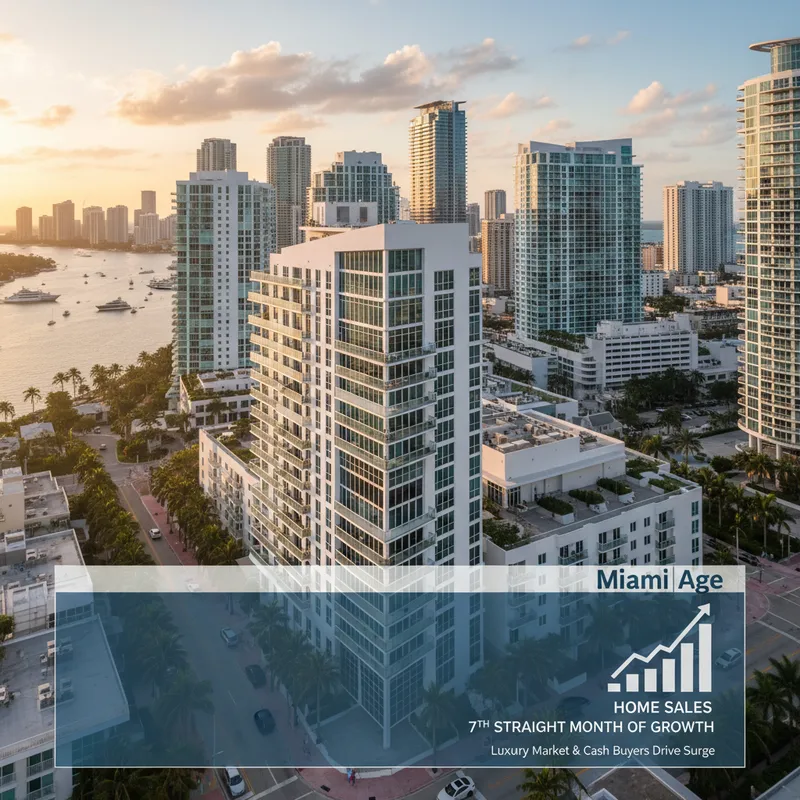
Miami-Dade County's real estate market continued its upward trajectory in March, marking the seventh consecutive month of year-over-year growth in total home sales, according to the latest statistics from the MIAMI Association of Realtors (MIAMI).
Total home sales increased by 6.6% compared to March 2025, rising from 2,002 to 2,134 transactions. The growth was led by the single-family home sector, which saw a 10.6% jump in sales, while condominium sales rose by a more modest 2.9%. The data highlights a market that is outperforming national trends, fueled by strong demand at both the highest and most accessible ends of the market.
The luxury segment, in particular, demonstrated significant strength. Sales of properties priced at $5 million and above surged by an impressive 27% year-over-year. At the same time, condo sales in the more affordable $300,000 to $600,000 range also saw a healthy 7.1% increase, indicating broad-based demand across different price points.
A magnet for cash and luxury
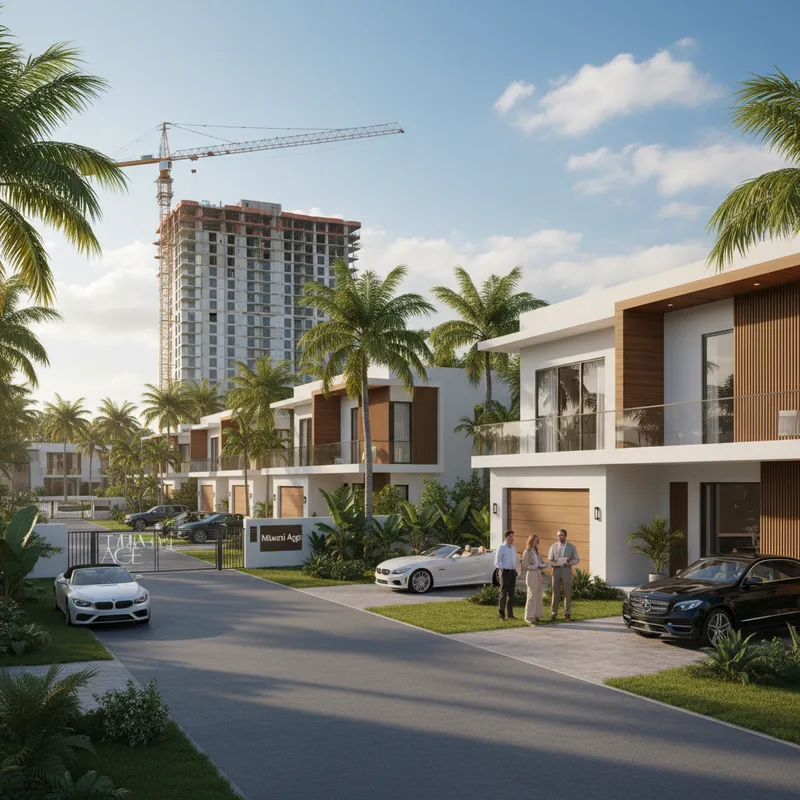
South Florida has solidified its reputation as the nation’s top destination for ultra-luxury real estate and cash buyers. The region averages one home sale of $10 million or more per day, a testament to the influx of wealth. In 2025, a stunning 82% of Miami condo sales over $1 million were all-cash transactions. Overall, cash sales represented 38.1% of all closed sales in March 2026, significantly higher than the national average of 27%.
Miami real estate is defined by sustained growth and global demand. You see this with the top companies moving here and ultra-wealthy buyers purchasing homes in Miami’s 'Billionaire Bunker' and beyond. Sales rose across all price ranges from entry-level condos and homes to properties over $5 million.
This high concentration of cash buyers, including many international investors and domestic relocators from more expensive U.S. markets, makes the local market more resilient to rising mortgage rates. According to Freddie Mac, the average 30-year fixed-rate mortgage stood at 6.18% in March, trending upwards due to inflation and geopolitical events.
“Amid more challenging macroeconomic conditions, it’s fair to expect South Florida’s housing market to be more resilient than the national housing market due to sustained wealth migration,” said Gay Cororaton, MIAMI REALTORS® Chief Economist. “South Florida has a larger presence of high-end cash buyers that make up over half of the market and who are less sensitive to rising mortgage rates.”
Long-term growth meets new inventory
The market's sustained growth is reflected in remarkable long-term price appreciation. Since 2011, the median price for a Miami single-family home has risen by 290.3%, from $172,700 to $674,000 in March 2026. Condominium prices have seen an even greater surge, appreciating 291% over the same period, from $113,800 to a median of $445,000.
Despite the price growth, Miami remains comparatively affordable on the world stage. According to the 2025 Knight Frank Wealth Report, a $1 million budget can secure 58 square meters of prime property in Miami, almost double the space one could buy in New York or London.
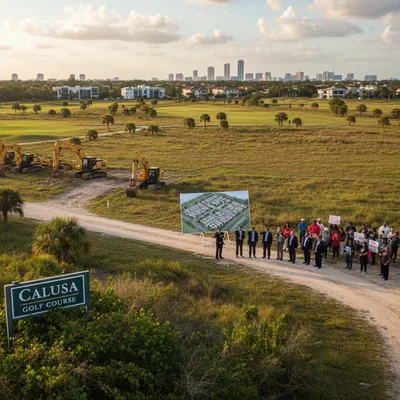
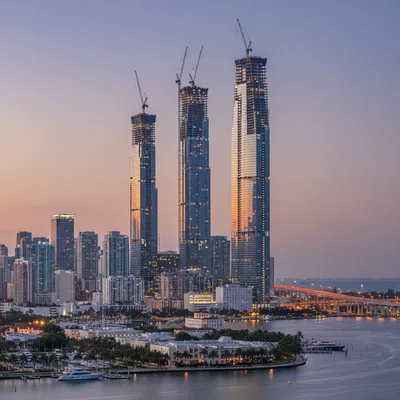
To address affordability and accommodate growth, Southeast Florida is leading the nation in multifamily construction, with 36,290 units underway as of late 2025. This building boom, coupled with Florida's Live Local Act passed in 2023, is expected to increase the housing supply and improve workforce housing options. The state law encourages developers to allocate at least 40% of new units as affordable housing in exchange for zoning incentives.
Market dynamics and future outlook
While the market for single-family homes is currently a seller's market with just 5.7 months of supply, the condo market favors buyers, with 13 months of inventory available. A market is considered balanced when it has between six and nine months of supply. Total active listings have declined for the second straight month, which could put upward pressure on prices if demand remains high.
However, the condo market faces a specific headwind: a lack of Federal Housing Administration (FHA) loan approvals. In the tri-county area of Miami-Dade, Broward, and Palm Beach, only 21 of nearly 2,400 condominium buildings are approved for FHA financing. This severely limits options for buyers who rely on these lower-down-payment loans.
The health of the market is underscored by the historically low number of distressed sales, which constituted only 0.4% of all transactions in March. This is a dramatic change from 2009 when distressed sales made up 70% of the market. The total economic impact of the 2,134 homes sold in March is estimated at $275 million for the local economy.
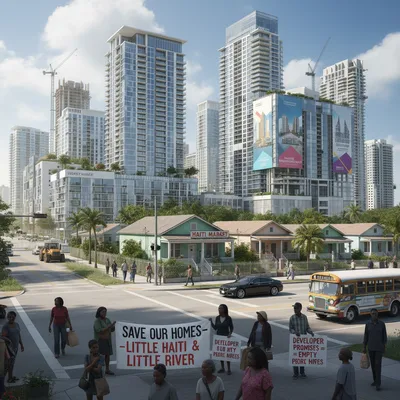
Looking forward, while national existing home sales have declined, Florida's market continues to expand, with statewide single-family home sales up 5.9% year-over-year. This sustained performance, driven by a unique combination of global appeal, cash-rich buyers, and ongoing development, positions Miami-Dade to continue bucking national trends. As faith and community groups continue to advocate for housing solutions, the ongoing construction boom offers a glimmer of hope for future residents of this bustling metropolis.