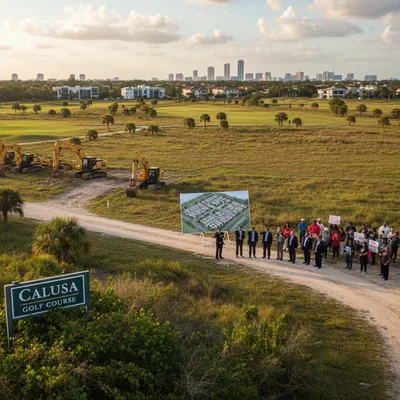
A sprawling $4.6 billion master-planned community is set to transform over 100 acres in Sweetwater, replacing the former Li’l Abner Mobile Home Park with a high-density urban village. The development, named "Flagler Center," received approval from the city commission for its initial plans, which outline a massive project including over 6,000 homes, a hotel, a new school, and a comprehensive medical campus.
The project is being spearheaded by developer CREI Holdings, which envisions a modern, walkable community. The site is located on 105 acres near Flagler Street and Northwest 112th Avenue, bordered by Florida’s Turnpike and the Dolphin Expressway. The development marks one of the largest redevelopment efforts in Miami-Dade County's recent history.
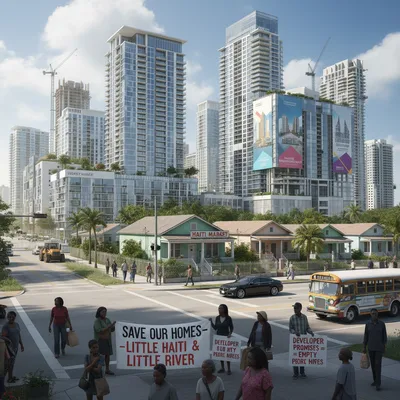
The approval comes after a controversial period that saw the displacement of approximately 3,000 elderly and working-class residents from the mobile home park. Starting in 2024, developer Raul F. Rodriguez, principal of CREI Holdings, began clearing the park, prompting an unsuccessful lawsuit from residents who were ultimately given 24 hours to vacate by a court order in October 2025.
A new standard for live, work, and play
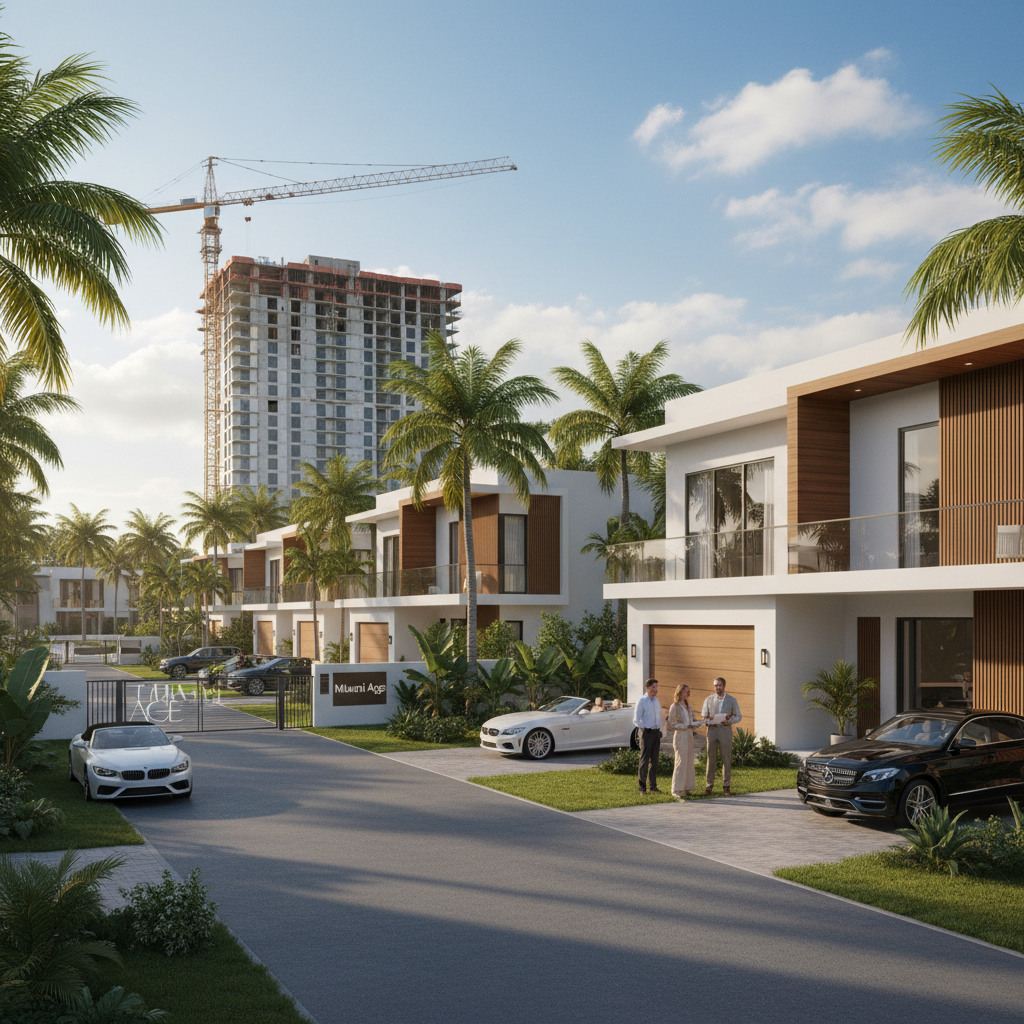
Developers are positioning Flagler Center as a fully integrated district where residents can live, work, and find entertainment without needing to travel far. The plans approved by Sweetwater officials emphasize pedestrian mobility and interconnectedness, aiming to create a vibrant, self-contained environment.
This is a project that’s destined to become the new standard for live, work, play, and thrive in the city of Sweetwater.
The community will feature amenities typical of large-scale master-planned developments, such as resort-style pools, fitness centers, and extensive retail and dining options. This model has become increasingly popular across Florida, which is home to 10 of the nation's top 25 best-selling master-planned communities, according to a 2025 report from real estate advisory firm Zonda.
Lisa McNatt, director of analytics at Homes.com, noted previously that the availability of large land parcels near metro areas and state-level incentives have made Florida a hotspot for such projects. The Flagler Center taps into this trend, promising a modern lifestyle centered on convenience and community amenities.
Housing and healthcare at the core
A significant portion of Flagler Center is dedicated to housing, with plans for more than 6,000 units. In a nod to the area's housing needs, the developer has committed to setting aside at least 1,000 units for affordable, workforce, and senior housing. This commitment follows the previous construction of the $86-million Abner III affordable housing high-rise by the same developer.

Healthcare is another cornerstone of the project. A 12.6-acre "comprehensive medical campus" is planned for the site’s northeast corner. This includes a 400-bed hospital, a medical outpatient facility, and an assisted living facility. CREI Holdings is currently marketing this parcel for sale to a healthcare provider, though no asking price has been announced.
The focus on integrated healthcare facilities aligns with a growing demand for accessible medical services within residential communities, particularly those with a significant senior population. The inclusion of these facilities is expected to create thousands of permanent jobs in the area.
A hurried approval process
The project advanced through Sweetwater’s legislative process at a rapid pace. CREI Holdings applied for an amendment to the city’s comprehensive plan in August 2025. By October, commissioners approved the creation of a new zoning district for the project, and in February, they approved the specific details and a 30-year development agreement with CREI. Similar rapid, large-scale development decisions have raised questions in other regions, such as when the council weighed an $800m port expansion.
The speed of the approvals raised concerns among some city officials. At a February meeting, Commission President Marcos Villanueva and Vice-President Jose Marti both expressed they had not had sufficient time to review the extensive documentation before the vote. "I know you’ve been working on this for years but it’s a lot for us to digest," Marti said during the meeting.
Sweetwater Mayor Jose ‘Pepe’ Diaz encouraged the commission to move forward, stating, "We were just trying to hurry and get this to you. We want to make sure it’s done right. At the same time, we want to give the applicant as much as possible to make this a successful entity."
A special district with taxing authority
Flagler Center will be established as a Community Development District (CDD), a special-purpose local government entity enabled by Florida law. This structure allows the developer to finance infrastructure––such as roads, utilities, and amenities––by issuing government bonds. These bonds are then repaid over time through non-ad valorem assessments on the properties within the district.
As a public entity, the CDD will be subject to Florida’s Sunshine Law, which requires transparency in its operations and public meetings. Mayor Diaz noted during a commission meeting that this transparency "will be huge." The CDD will be governed by a board of supervisors, initially appointed by the developer but eventually elected by the residents of Flagler Center.
Mayor Diaz will act as the lead negotiator for the city in finalizing details with CREI Holdings, a role Villanueva described as a "professional courtesy." These negotiations will determine the responsibilities for roadway improvements both on and off the site and other key infrastructure details before the first phase of construction can begin.
According to a letter from the developer's attorney, the project is projected to generate over $25 million in new annual tax revenue for the city, create more than 29,000 construction jobs, and establish 5,000 permanent jobs upon completion.