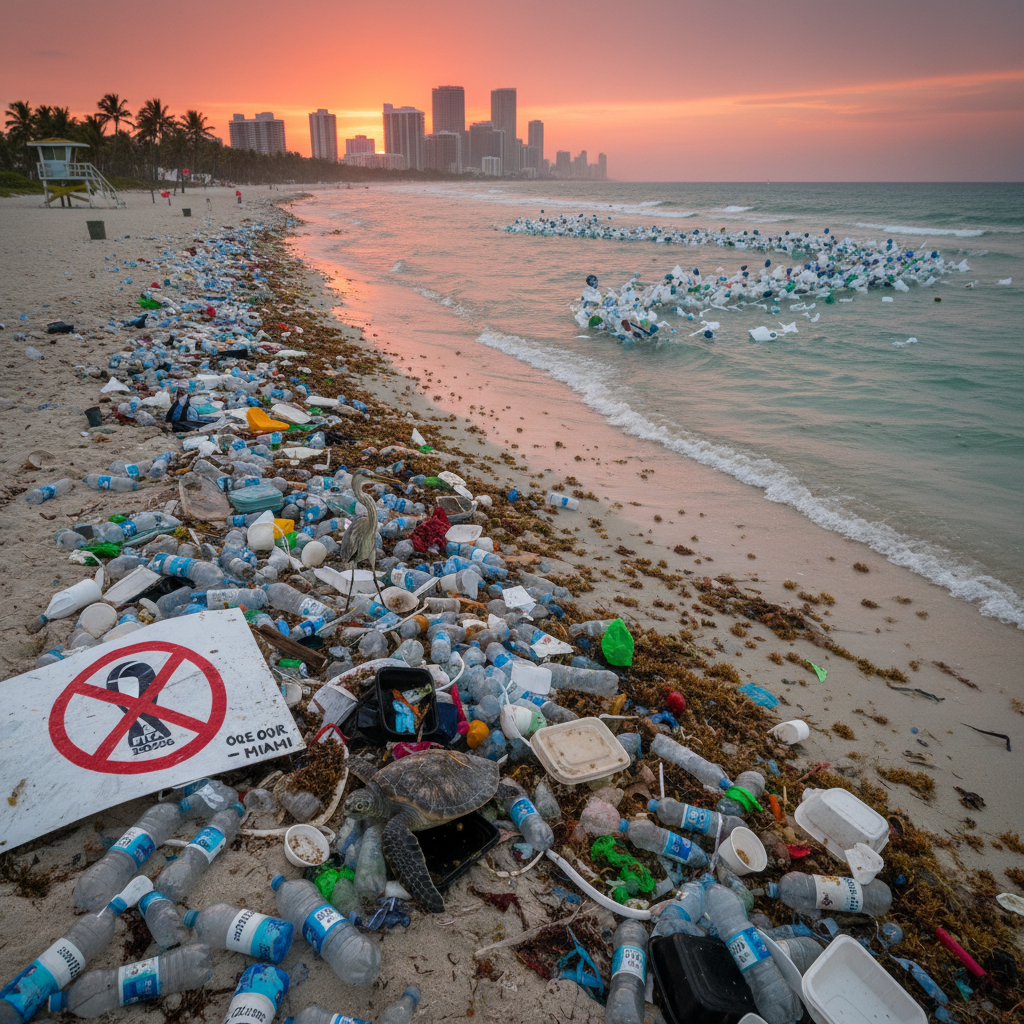
As Miami welcomes soccer fans for the 2026 FIFA World Cup, a wave of plastic pollution is expected to wash over the city, according to environmental advocates. The ocean conservation nonprofit Oceana warns that decisions made by soccer’s global governing body could double the amount of plastic waste typically generated at Hard Rock Stadium, which is hosting seven matches during the tournament.
The controversy stems from FIFA’s last-minute policy changes that undermine the stadium’s and Miami-Dade County’s established sustainability practices. Organizers have shelved an aggressive recycling program and, citing safety concerns, reversed an initial decision to allow reusable water bottles. Instead, fans attending the matches at the venue, temporarily renamed Miami Stadium, will only be permitted to bring water in sealed, single-use plastic bottles, a move that advocates say will create a mountain of unnecessary waste.
“Events like these create just such a tremendous amount of plastic waste,” said Hunter Miller, deputy field director for Oceana's U.S. field team. “The responsible thing to do is to find ways that we can experience these events, but also have more sustainability.”
Stadium’s green progress cast aside
The decision is a significant step backward for a venue that has become a leader in reducing environmental impact. Since 2019, Hard Rock Stadium has implemented a robust program to minimize single-use plastics at major events, including Miami Dolphins games and the annual Formula 1 race. The stadium can seat over 65,000 spectators, and its efforts have yielded substantial results.
When it hosted the Super Bowl in 2020, the stadium famously eliminated about 2.7 million plastic items by switching to aluminum and cardboard containers. It also provides paper recyclable cups at water stations throughout the venue. According to the Miami Dolphins organization, these initiatives help divert approximately 4,300 tons of waste from landfills each year.
Tom Garfinkel, president and CEO of the Miami Dolphins and Hard Rock Stadium, highlighted the program's success in 2020. “If we can do it at Hard Rock Stadium, with all the events we have here including the Super Bowl, then there is no reason why others can’t do the same,” Garfinkel said at the time. The anchor text should be descriptive (4-8 words), not the full headline if it's long. Similar issues have surfaced in Christchurch, New Zealand, where All Whites legends ignite World Cup fever. Oceana had engaged in extensive discussions with FIFA to encourage the continuation of these practices. Miller noted that in Vancouver, another host city with a similar stadium recycling program, FIFA also opted against it, choosing disposable aluminum cups instead.
A tide of plastic waste
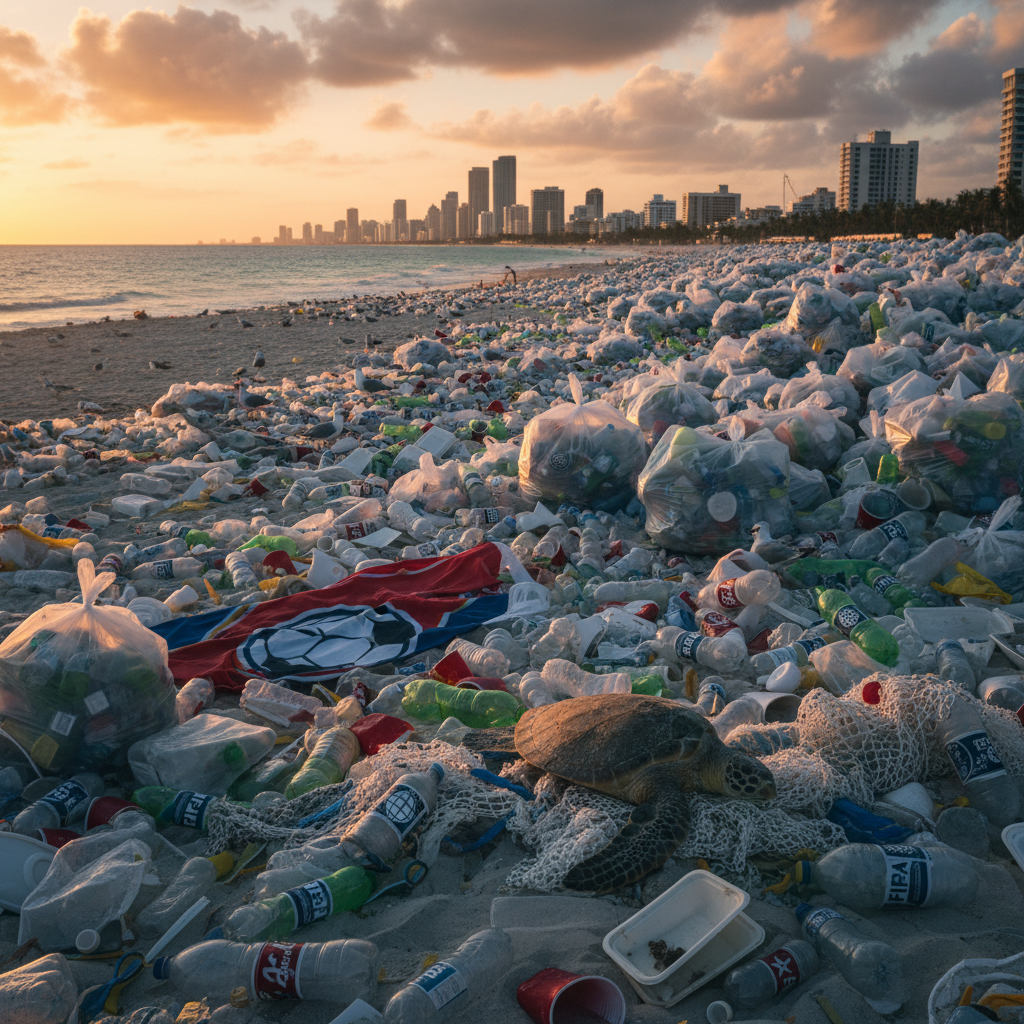
The scale of waste generated by mega-events is staggering. A 2024 study published in the Journal of Cleaner Production found that a single Super Bowl can produce 40 tons of waste, much of it plastic cups and plates. The United Nations has estimated that a single major sporting event can generate as many as 750,000 plastic water bottles. With seven matches scheduled in Miami Gardens, the cumulative impact could be immense.
FIFA’s justification for banning reusable bottles on June 5, just days before the first match, was “safety concerns.” However, critics point out the contradictory nature of allowing sealed single-use plastic bottles while prohibiting more durable containers. Oceana renewed its call for FIFA to at least provide reusable or paper cups at the free water stations inside the stadium, a standard practice during other events held there.
While FIFA has made public commitments to environmental sustainability, including a goal to cut its greenhouse gas emissions in half by 2030 and encouraging stadiums to achieve LEED certification, advocates say these goals are being tossed aside at match time. The reversal on reusable bottles is seen as a major failure to uphold those commitments.
Local efforts meet global indifference
FIFA’s actions also run counter to broader environmental initiatives in the region. In 2021, Miami-Dade County launched the voluntary Plastic Free-305 program to encourage businesses to reduce their plastic footprint. In 2024, the county went a step further, banning single-use plastics at its own facilities, including Miami International Airport. The city has also recently started a new initiative to reduce waste through its own composting pilot program.
To help mitigate the impact of the bottle ban, Miami-Dade County has set up two water trailers with eight spigots each to provide free water and cups to fans outside the stadium. While this local effort is a positive step, it doesn’t address the vast quantities of plastic that will be sold and consumed inside.
The issue extends beyond simple waste management. Growing public awareness around plastic pollution is fueled by alarming research into its health effects. Miller pointed to the discovery of microplastics in the human body as a key driver of public demand for better environmental stewardship from large organizations.
As the public, we are demanding better policies, so you're seeing great things like the Hard Rock Stadium adopting these sustainability policies because people want them, because we know about these larger issues.
As the tournament continues through the month, advocates hope the global spotlight will pressure FIFA to reconsider its approach for future events, aligning its actions with the environmental values that both host cities and fans increasingly demand.