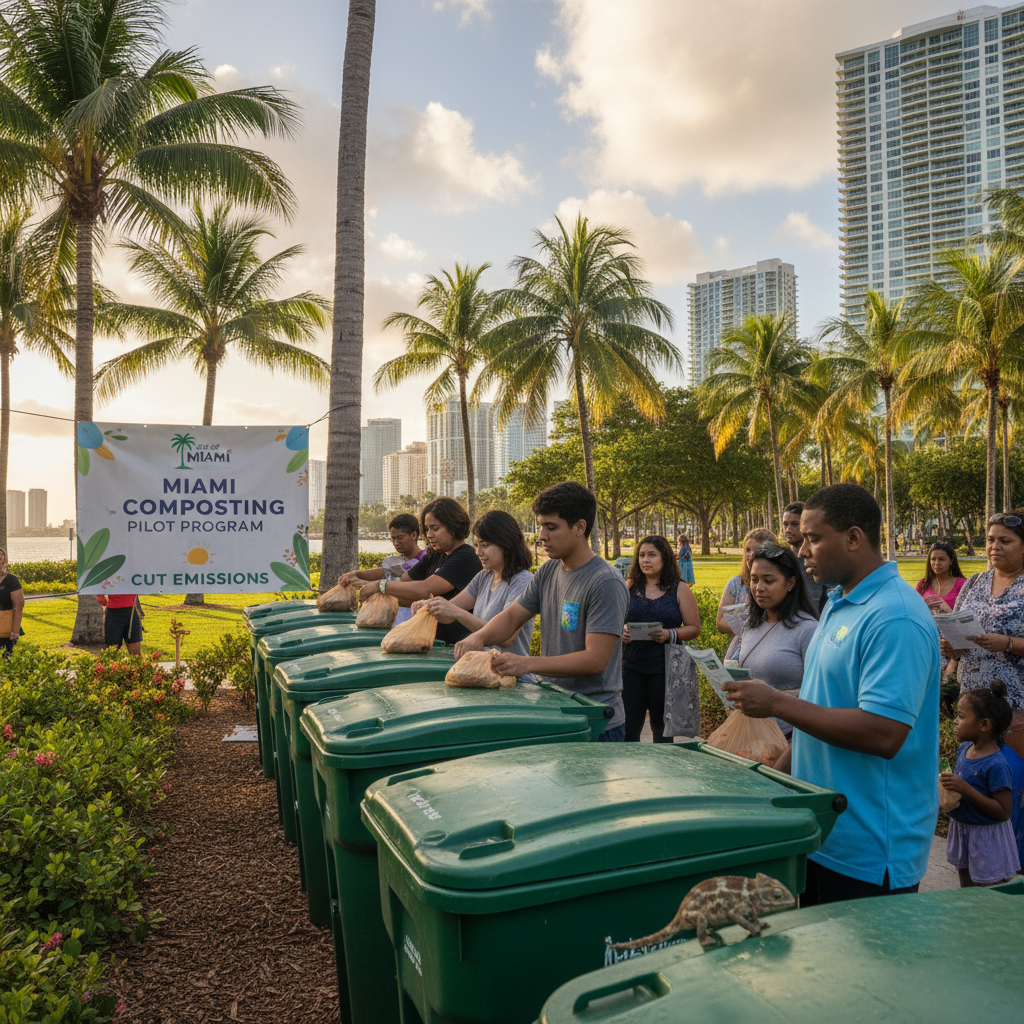
The City of Miami has begun a new initiative aimed at tackling food waste and its environmental impact. Mayor Eileen Higgins announced the launch of a three-month Composting Pilot Program on May 1, a focused effort to divert food scraps from the city’s waste stream and reduce harmful greenhouse gas emissions.
Led by the City of Miami’s Department of Solid Waste, the program represents a significant step in the city’s ongoing sustainability and climate resilience efforts. By collecting and composting food scraps, Miami aims to shrink the volume of waste sent to overflowing landfills and create a valuable resource for enriching soil. The pilot will serve as a critical test for developing a larger, scalable composting model that could eventually be rolled out across various city operations and public spaces.
The initiative addresses the pressing issue of food waste, a major environmental and economic challenge. According to the U.S. Environmental Protection Agency (EPA), food is the single largest category of material placed in municipal landfills, where it emits methane, a potent greenhouse gas. This decomposition of organic materials in an oxygen-free landfill environment contributes significantly to climate change.
By diverting these organic materials, Miami's program not only reduces landfill dependency but also helps mitigate the city's carbon footprint. The success of this three-month trial will be closely monitored to determine its feasibility and effectiveness for a broader, city-wide application, potentially revolutionizing how Miami manages its organic waste.
The climate connection: Methane and landfills
A key driver of the composting pilot is the urgent need to cut methane emissions. When food scraps and other organic matter are buried in landfills, they undergo anaerobic decomposition, a process that produces large quantities of methane. This gas is a powerful agent of global warming, with a heat-trapping capacity more than 25 times greater than that of carbon dioxide over a 100-year period, according to the EPA. For a coastal city like Miami, which is acutely vulnerable to the effects of climate change such as sea-level rise and extreme weather events, reducing greenhouse gas emissions is not just an environmental goal, but a critical component of its long-term survival strategy. Similar issues have surfaced in Waikato, where Waikato University expands environmental planning studies. The city’s website highlights numerous climate-related challenges and initiatives, from hurricane preparedness guides to the establishment of public cooling centers for extreme heat events.
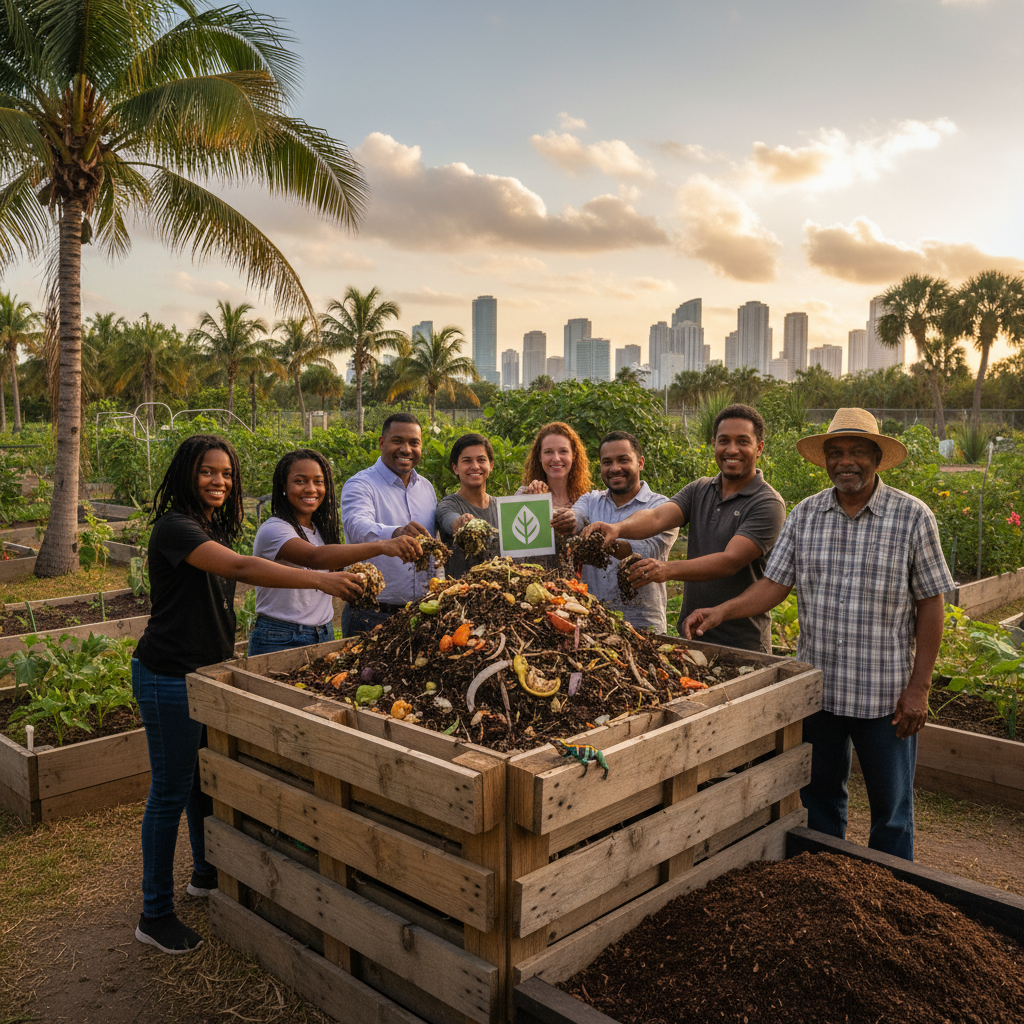
Composting provides a direct and effective alternative. The process introduces oxygen into the decomposition cycle, almost entirely eliminating the production of methane. Instead of a harmful gas, the primary byproducts are water, a small amount of carbon dioxide, and a nutrient-dense soil amendment known as compost. This material is highly valued in agriculture, landscaping, and home gardening for its ability to improve soil health, retain water, and reduce the need for chemical fertilizers.
A scalable model for a resilient future
The pilot program is explicitly designed to test a “scalable model” for composting. This suggests that city officials are thinking beyond the initial three-month period, looking for a sustainable, long-term solution that can be integrated into Miami’s existing infrastructure. The pilot will likely provide crucial data on participation rates, collection logistics, contamination issues, and the overall cost-effectiveness of the program.
Information gathered will inform how a larger program might function, including potential expansion into residential curbside collection, services for commercial businesses like restaurants and hotels, and use in public spaces such as parks and event venues. Successfully scaling the program would align with the goals of other major city projects, such as the Miami Forever Bond, which is intended to fund projects that build a more resilient future for the city.
This strategic, data-driven approach allows the city to innovate while managing risk, ensuring that any future city-wide program is built on a solid foundation of practical experience. It reflects a growing trend among municipalities to adopt circular economy principles, where waste is not simply discarded but repurposed as a valuable resource.
Miami's broader environmental efforts
The composting pilot does not exist in isolation. It is the latest addition to a suite of environmental programs and policies aimed at making Miami cleaner and more sustainable. The city’s “Keep Miami Clean” campaign, for example, already encourages residents to reduce litter and participate in recycling programs. Composting is a logical and complementary next step in comprehensive waste management.
These initiatives, combined with land-use decisions like the recent approval of new housing on the former Calusa golf course, highlight the complex and often competing priorities the city must balance as it grows. The development of green infrastructure and sustainable practices is crucial for ensuring that this growth does not come at an untenable environmental cost.
By launching this pilot, the City of Miami is exploring a proactive solution that addresses waste management, climate change, and soil health simultaneously. It’s an investment in a system that could yield long-term environmental and economic benefits, enhancing the quality of life for all residents while bolstering the city’s defenses against a changing climate.
The findings from the next three months will be pivotal. A successful pilot could pave the way for a permanent, city-wide composting program, marking a major milestone in Miami's journey toward becoming a more sustainable and resilient coastal metropolis.