Miami’s saltwater fishing is famous for a reason: Biscayne Bay, ocean inlets, bridges, and miles of shoreline put snook, snapper, jacks, and tarpon within reach of anyone with a rod and a plan. The challenge for most locals is not whether fish exist, it’s finding public places where you can legally fish, park without drama, and actually work a spot productively.
This guide focuses on accessible, shore-based saltwater fishing in the Miami area, piers, bridges, jetties, seawalls, and park shorelines you can reach without a boat. It also includes the practical details that make or break a trip: addresses, fees, parking, hours, basic tactics, and a quick rules refresher. For safety and comfort in summer, pair this with our internal guide Beat the heat: your guide to summer in Miami (2026).
Best public fishing pier near Miami: Newport fishing pier in Sunny Isles Beach
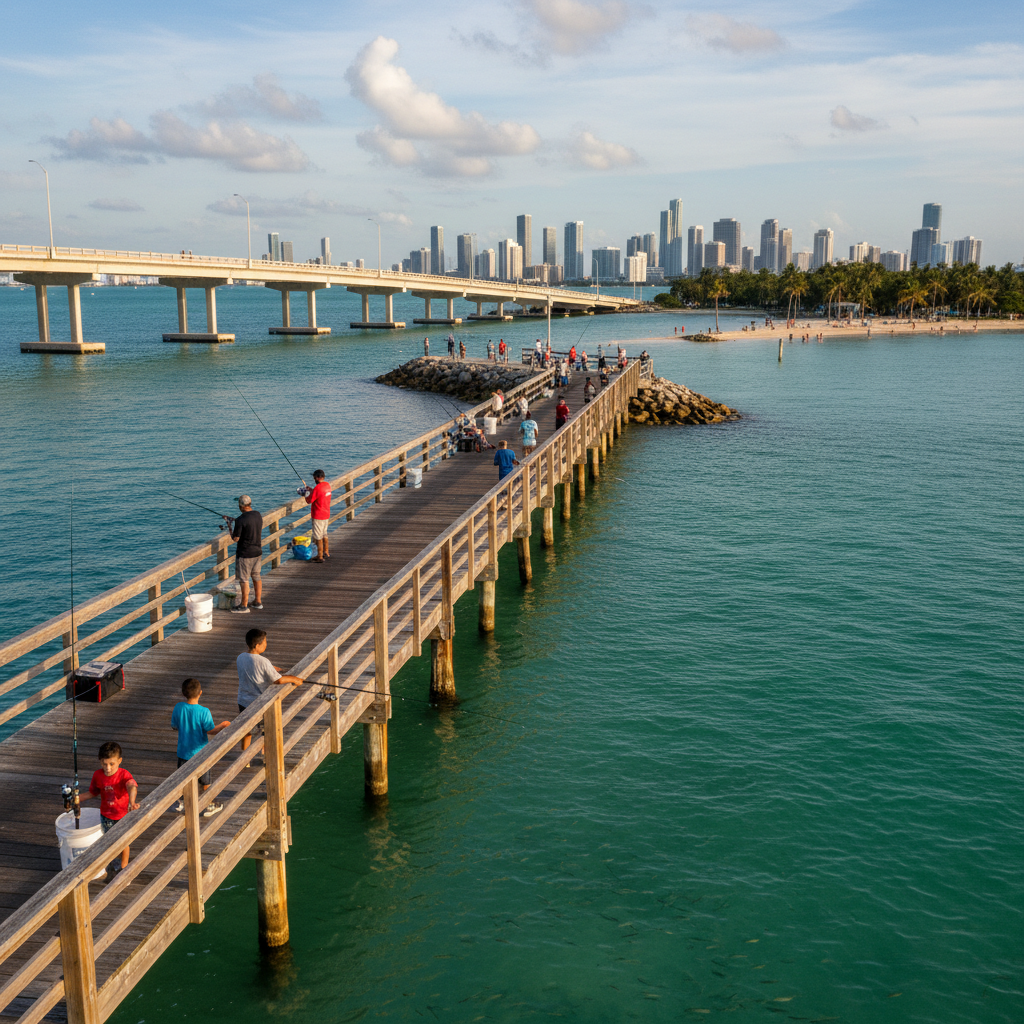
If you want the simplest “show up and fish” option on the Atlantic, Newport Fishing Pier is the most straightforward public pier setup in the Miami area. It is long enough to reach deeper water, has restrooms, and is managed with clear rules, which helps keep it family friendly and predictable.
Address: 16501 Collins Ave, Sunny Isles Beach, FL 33160. Official info: City of Sunny Isles Beach, Newport Fishing Pier page.
Hours: Tuesday, Thursday 7 a.m. to 9 p.m., Saturday and Sunday 7 a.m. to 9 p.m., Monday, Wednesday, Friday 12 p.m. to 9 p.m. (Restrooms daily 7:30 a.m. to 8:30 p.m.). Fee: Walking is free, fishing fee for non-residents is $10, Sunny Isles Beach resident cardholders free (fees and rules can change, check the city page).
Parking: Metered parking at Pier Park is enforced 24 hours a day, with designated handicap spaces. Bring a payment method for meters and expect peak demand on weekends.
What to fish for: Pier anglers commonly connect with snapper, jacks, mackerel, and seasonal runs of other species depending on water temperature and bait presence. Start with a light spinning setup for pilchards and small jigs, then scale up if larger fish show.
Productivity tip: On windy days, fish the protected side of the pier rail and use a slightly heavier weight to hold bottom. The city requires fishing east of the yellow line, and there is a three-rod limit per person.
Best Miami Beach pier for easy access: South Pointe Park pier
South Pointe Park Pier is one of the most approachable places to fish in the urban core, with wide walking paths, a clean park setting, and steady water movement at the southern tip of Miami Beach. The pier is also a scenic spot for families, so plan to be courteous and keep tackle organized.
Location: South Pointe Park, 1 Washington Ave, Miami Beach, FL 33139. Park info: MiamiandBeaches.com South Pointe Park.
Hours and costs: Park hours can vary seasonally, and the pier is typically open during park hours. Fishing is generally free from shore in Florida, but you still need to follow Florida Fish and Wildlife Conservation Commission regulations for size, season, and bag limits.
What to fish for: Jacks, snapper, and passing pelagics during bait pushes. Early mornings can be productive before the walkway crowds build.
Productivity tip: Bring a casting spoon or small metal jig for fast-moving fish. For bottom fishing, use fresh shrimp or cut bait and keep your rig tight to avoid tangles with pedestrians.
Best inlet fishing in Miami: Haulover inlet and adjacent shore access
Haulover Inlet is one of the most consistent “moving water” fishing zones in the area. Inlets concentrate bait, create eddies, and give shore anglers a shot at both inshore species and ocean visitors, especially when current is ripping.
Where to start: Haulover Park area near the inlet, roughly 10800 Collins Ave, Miami Beach, FL 33154 (use Haulover Park on your GPS, then follow signage toward the inlet). Parking fills quickly on weekends.
What to fish for: Snook, tarpon, jacks, barracuda, and snapper depending on season and bait. Night sessions can be productive in warm months, but prioritize safety and fish with a buddy.
Productivity tip: Fish moving water. Plan around tide changes, and focus on seams where current meets calmer water. If you see birds working bait, keep a jig ready.
Safety note: Inlet rocks and wet surfaces can be dangerous. Wear non-slip shoes and avoid fishing from unstable spots.
Best bridge fishing in the Miami area: Rickenbacker Causeway pull-offs (Key Biscayne route)
Bridge and causeway edges can be some of the most productive shore fishing in South Florida because they combine current, depth changes, and structure. Along the Rickenbacker Causeway toward Key Biscayne, anglers often work shoreline and pull-off areas where legal access exists.
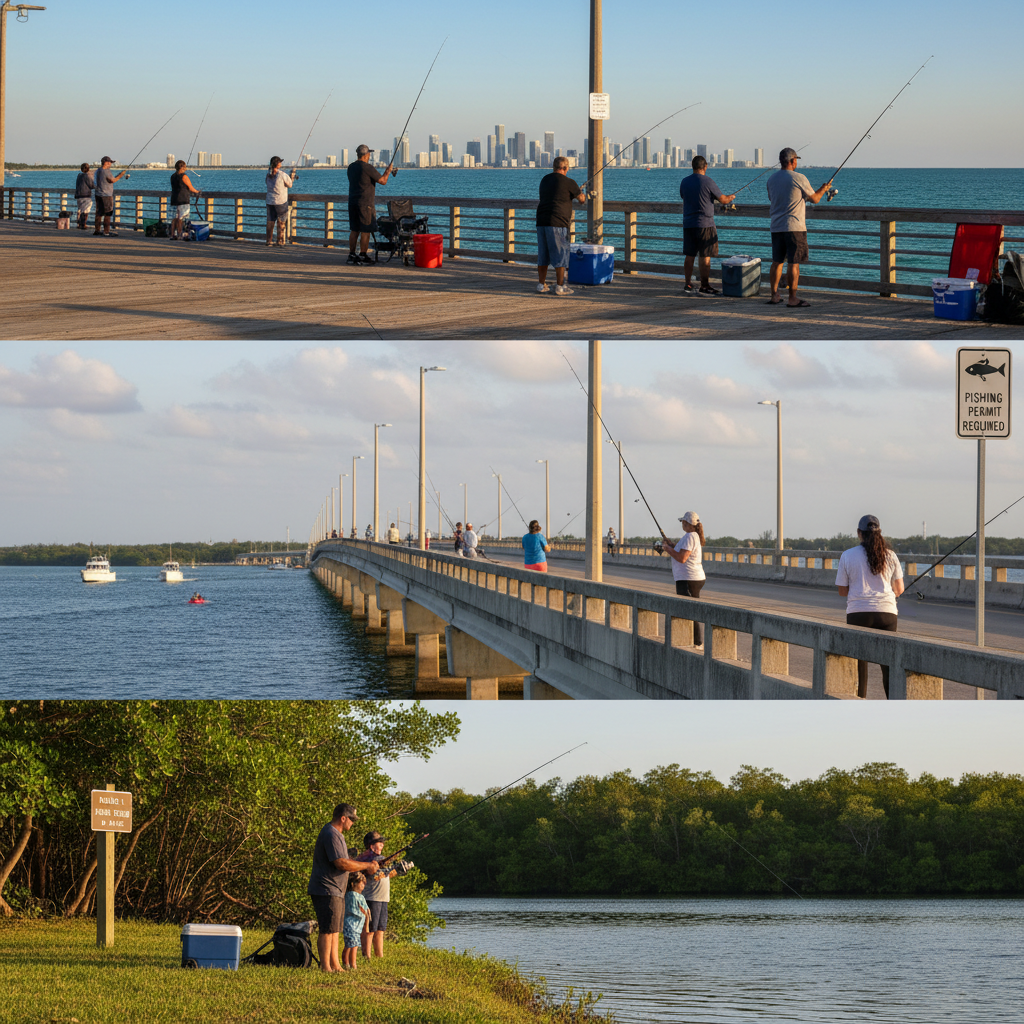
General area: Rickenbacker Causeway, Miami, FL 33149. Closest landmark: near the approach to Key Biscayne and Virginia Key. Access rules and no-parking zones are actively enforced, so only stop where signage clearly allows it.
What to fish for: Snapper, jacks, and seasonal tarpon activity in Biscayne Bay. As FishingBooker notes, Biscayne Bay is a top inshore area for tarpon, especially May through July, along with snook and mangrove snapper. For a similar guide to fishing in another region, check out our article on fishing spots in Hamilton and Waikato.
Productivity tip: Bring a long-handled landing net or plan to fish lighter leaders if you’re on higher seawalls. Live shrimp or small baitfish under a float can be effective in calmer bay water.
Heat tip: There is little shade on the causeway. Pack water, sun protection, and consider sunrise or evening sessions.
Best shore fishing in Biscayne Bay parks: Matheson Hammock Park
Matheson Hammock Park is a go-to for calmer bay water, especially if you prefer park amenities and a less chaotic vibe than inlets. The shoreline and nearby channels can hold snapper, small jacks, and other bay species, and it’s a good place to refine light-tackle skills.
Address: 9610 Old Cutler Rd, Coral Gables, FL 33156. Phone: 305-665-5475 (Miami-Dade County). Fees and hours vary, so check Miami-Dade Parks for current gate fees.
What to fish for: Mangrove snapper and other inshore species. Bring small hooks, light leaders, and be ready for nibblers like puffers.
Productivity tip: Fish the first and last hour of moving tide. If the water is clear and calm, downsize leader and bait.
Local context: If you are planning a full park day with family, Matheson and nearby parks often host community events. For another big local-park read, see our internal story Tropical Park hosts Miami-Dade's largest Fourth of July cele.
Best “far south” public shoreline for space and structure: Black Point Marina
For anglers who want elbow room, Black Point Marina down in south Miami-Dade is worth the drive. It places you closer to the open waters of Biscayne Bay and gives you marina structure, channels, and wind-protected options.
Address: 24775 SW 87th Ave, Miami, FL 33032.
What to fish for: A mix of bay species, with chances at snapper, jacks, and seasonal visitors. Bring both a light setup for smaller fish and a heavier rod if you expect stronger runs.
Productivity tip: Walk and look before you cast. In marinas, bait schools and current lines tell you where to start. Fish around structure, but keep your drag set to avoid getting cut off.
How to choose the most productive shore fishing spot in Miami
When Miami anglers say a spot is “productive,” they usually mean it has at least two of the big three: moving water, structure, and bait. Here is a simple way to decide where to go on a given day.
- Choose an inlet (like Haulover) when you want current and a shot at larger fish.
- Choose a pier (like Newport) when you need guaranteed access and deeper water.
- Choose a bay park (like Matheson) when wind is howling on the beach.
- Choose a bridge or causeway edge when you want structure plus depth changes.
If you are brand new and want the most straightforward learning curve, start on a managed pier with amenities, then graduate to bridges and inlets once you have your knots, rigs, and landing plan dialed in.
Rules, licenses, and fish handling for Miami shore anglers
Regulations in Florida can change by species and season, and they are strictly enforced for popular targets like snook and lobster. Before you fish, review the Florida Fish and Wildlife Conservation Commission regulations and make sure you have the correct license. Start at the official FWC site: FWC recreational saltwater fishing.
- License: Many shore anglers need a Florida saltwater fishing license, unless exempt.
- Bag and size limits: Vary by species, and can differ in state vs federal waters.
- Protected species: Learn how to identify and release them properly.
- Line disposal: Use monofilament recycling bins when available, especially on piers.
Also note that some facilities have additional rules. Newport Pier, for example, posts gear limits and bans specific practices such as certain net types, snatch hooks, and shark fishing, and it restricts fishing to east of the yellow line. Always read onsite signage.
Finally, be a good shoreline neighbor. Miami’s public spots stay open when anglers pack out trash, keep hooks under control around kids and joggers, and avoid blocking paths. The cleaner we keep our spots, the longer we get to enjoy them.
If you are turning your fishing trip into a bigger weekend itinerary, our cross-site read on free activities in another city is a good reminder that the best outdoor days often start with simple planning: 15 fun & free things to do in Papatoetoe & Ōtara (2026 guide).