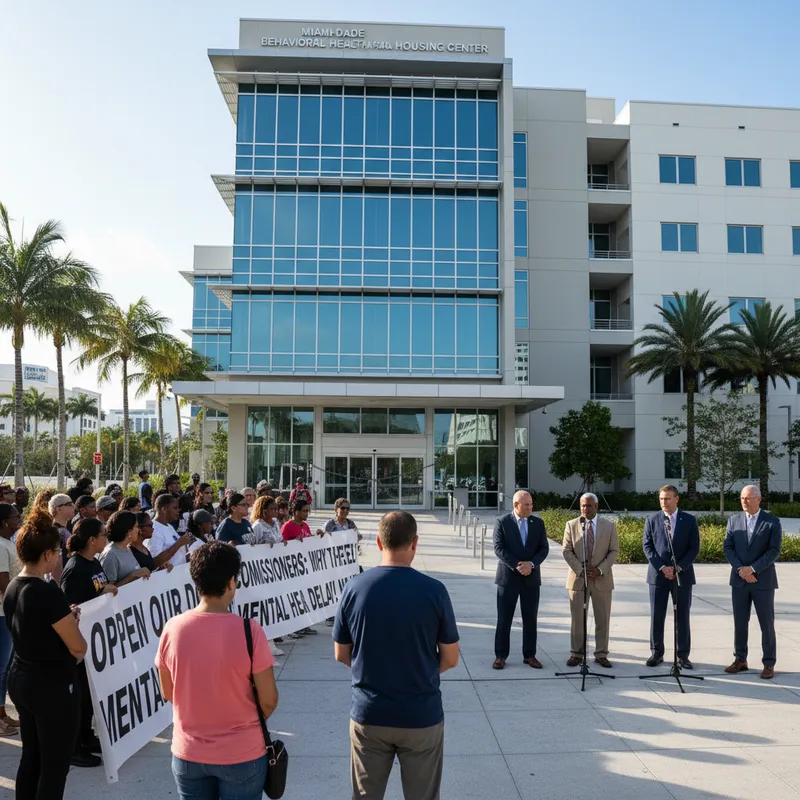
A new, seven-story facility built to provide critical mental health and housing services in Miami-Dade County has remained empty since its completion in 2023, prompting a surge of community action to break the political deadlock. Located between the Allapatah and Wynwood neighborhoods, the Center for Mental Health & Recovery is at the center of a debate over county priorities and funding.
Last week, nearly 800 residents gathered for the annual meeting of People Acting for Community Together (PACT), one of the county's most influential interfaith organizations. The group presented a list of demands to county officials, with the opening of the long-stalled center at the top of the agenda.
Advocates argue that the facility's services are potentially life-saving. The center was designed as a comprehensive residential treatment facility for people living with mental illness who are often caught in a cycle of short-term jail stays and homelessness. Opening it, they say, could significantly reduce the county's jail population and address the growing crisis of unhoused individuals on the streets of Miami.
The issue represents a critical juncture for a county grappling with complex social challenges. Miami's history is one of growth driven by diverse communities, from early Bahamian settlers to more recent Haitian immigrants, who have all shaped its social fabric. Yet, this growth has also brought challenges, including a severe lack of affordable housing and resources for its most vulnerable residents.
A crisis in numbers
The statistics laid out by advocates paint a stark picture of the need. According to data presented at the PACT meeting, about 1,000 of the county's chronically unhoused population are also living with a serious mental illness. The problem extends deep into the criminal justice system, where up to 50% of the Miami-Dade jail population is classified as having a mental illness.
The financial cost of inaction is staggering. Former judge Steve Leifman, who has been a primary force behind the project, stated that housing incarcerated people with mental illnesses costs county taxpayers approximately $1.1 million every single day. The new center is designed to offer a more humane and cost-effective alternative to incarceration.
This situation is not unique to Miami-Dade. Across the United States, jails and prisons have become de facto mental health institutions. According to the National Alliance on Mental Illness, nearly 2 in 5 people who are incarcerated have a history of mental illness, highlighting a nationwide systematic failure to provide adequate community-based care. Similar issues have surfaced in Washington County, where Western State Hospital officials reveal new design amid security concerns.
'We're lacking capacity'
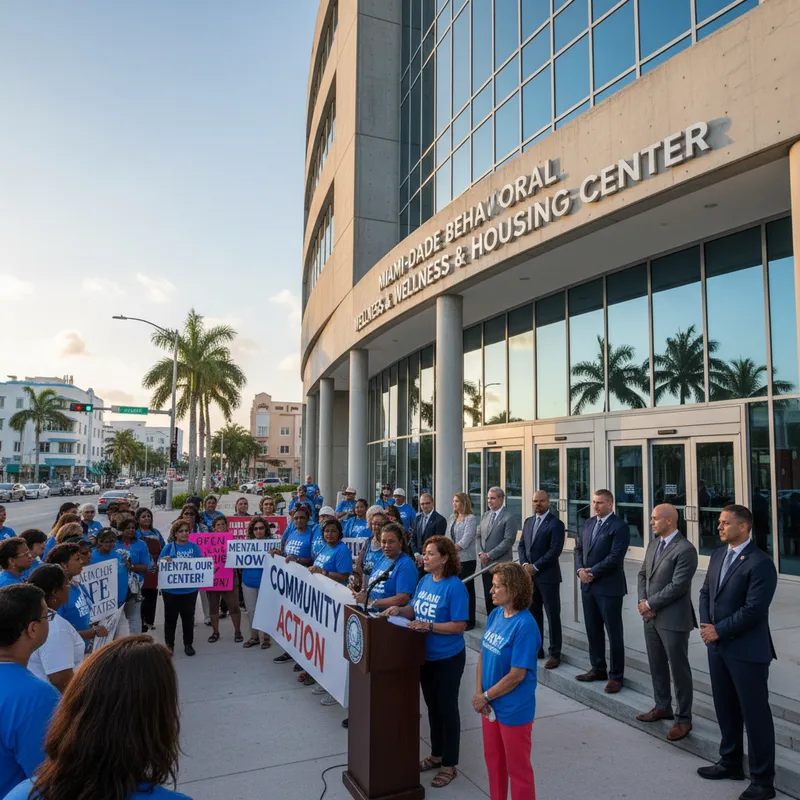
This is a fully constructed, ready-to-open facility. We are not lacking data or solutions, we're lacking capacity. This center offers that capacity.
Leifman, who retired from the Eleventh Judicial Circuit Court in 2024, has been a tireless advocate for criminal justice and mental health reform for years. He stressed the urgency and the missed opportunity the empty building represents.
PACT, which has a long history of securing commitments from local leaders on social issues like housing and mental health services, also used the meeting to press officials on other critical needs. The group demanded the county create a sliding scale of incentives for developers to build more affordable housing and called for using neighborhood-specific income data to set rent limits, rather than county-wide averages that can distort the reality of local housing costs.
Decades of delay
The journey to build the Center for Mental Health & Recovery began nearly two decades ago. In 2004, Miami-Dade voters approved a countywide bond referendum to fund the public health facility. Despite this early public mandate, the project moved slowly. Construction was finally completed in 2023, but the doors never opened.
In 2024, Miami-Dade Mayor Daniella Levine Cava directed the county commission to negotiate an operating agreement with two local nonprofit organizations. The mayor has said that funding for a two-year pilot program to run the center is secured. "It's in the hands of the [county] commission," Levine Cava said last week, reiterating her support for the project.
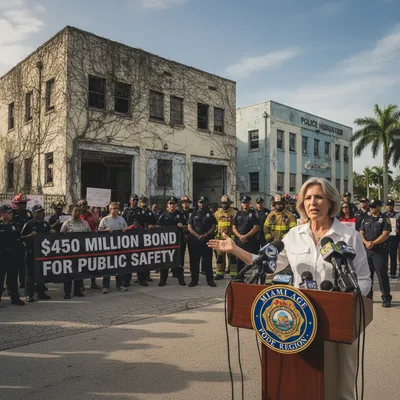
However, some commissioners have expressed reservations, citing concerns over the long-term budget implications once the initial two-year pilot funding is exhausted. The commission deferred a vote on the operating agreement last month, leaving the item's future uncertain and raising frustrations among community members who see a desperately needed solution sitting just out of reach. This debate over funding priorities is a recurring theme in county politics, as seen in other major initiatives like the $450 million bond proposal to repair deteriorating infrastructure.
What happens next?
Following the impassioned calls to action at the PACT meeting, two local officials have pledged to move the issue forward. Miami-Dade Commissioner Oliver G. Gilbert III and Miami Commissioner Ralph Rosado both agreed to support the center and formally request that Commission Chair Anthony Rodriguez add the item to the agenda for Tuesday's county commission meeting.
The decision will test the commission's willingness to invest in a long-term social service infrastructure versus its concerns about future financial commitments. For the hundreds of community members who gathered to demand action, and for the thousands of vulnerable residents whose lives could be changed by the center, the outcome of that meeting cannot come soon enough. More information can be found at The American Review.